





The Art of Pole Fishing.
Pole fishing is a popular method of catching fish whether you fishing in freshwater or saltwater. Made out of Graphite Carbon they are designed to bring strength sensitivity and flexibility to improve your comfort level. The popularity of pole fishing has grown immensely in the last few years. Much of the credit for this must be given to the tackle manufacturers who continue to produce cheaper, lighter, stronger poles each season.
This allows casting fugue, feel every movement and strike of the fish and fighting the biggest of fish with the lightest of tackle. They can't be used in the same manner as regular 2-3 piece rods, fighting and catching a big fish with them is different and more fun. You can never get this feeling and performance from rods made out of bamboo.
The pole gives you total control of your tackle whilst float fishing, allowing you to use much lighter rigs, provide a level of accuracy that a rod and reel can't produce. The pole allows you to place your bait in exactly the spot that you want to fish, it allows you to chum with ground bait or loose particles with extreme accuracy. It also allows you to land fish much quicker that with a rod and reel. Once you learn how to use pole, you'll ask yourself why it wasn't sooner.
The pole gives you total control of your tackle whilst float fishing, allowing you to use much lighter rigs, provide a level of accuracy that a rod and reel can't produce. The pole allows you to place your bait in exactly the spot that you want to fish, it allows you to chum with ground bait or loose particles with extreme accuracy. It also allows you to land fish much quicker that with a rod and reel. Once you learn how to use pole, you'll ask yourself why it wasn't sooner.
What makes pole fishing the leading competitive method on fresh water?
The first and most important reason is Bait Presentation.The short distance between the tip of the pole and the float makes the rig under angler's constant control.

Whether holding the float still, moving it left-right with various speeds, slowing it down in a current, or sometimes lifting it up and down, there is always a right way to manipulate the hook bait in order to cause to be it appealing to any nearby fish. Often you just have to copy nature, try to match the same look how is the natural forage laying, or moving along the bottom. Use hook bait that matches or imitates native insects or other food items living in the water. Like bloodworm, often 'shoot' themselves few inches above the bottom before slowly sinking back down. By simply lifting the float up a few inches with the pole, and dropping it back down, the hook bait basically mimics this natural movement. As this is often is the only way to get shy fish to bite.
The second main advantage of pole fishing is AccuracyYou can place your bait in exact spot where you want it, as quietly as possible, to get it in to the hard to reach places where reel rod can't.

Using pole rods allows to throw a bait on a hook in the window of aquatic vegetation, or even over the edge of thickets. It allows you to chum with ground bait or loose particles with extreme accuracy. Because we feed ground bait to attract the fish under the pole tip, our hook is constantly around a small concentrated area of feed, i.e. right in front of the fish's mouth! Pole allows you to concentrate ground baits in very small areas of water and be able to fish outside, over or above of your feed area with the utmost accuracy.
The third indispensable advantage of the pole is being able to fish with the Lightest of Tackle
That means a smaller and lighter float, thinner line, and a smaller hook. It is a fact that lighter tackle always produces more bites, since, obviously, it is less visible to the fish. Light tackle allow presenting your bait as quietly as possible with great accuracy. Pole's extra-sensitive tip allows you to feel even the smallest bites. It will increase your comfort, light Weight allows you to fish all day without arm fatigue, and you can catch more fish.
Rod feel more delicate when casting because of an extra flexibility and lightness, it is even great for slower casting. The combination of slightly stif rod and the stiffer tip make casting a light line with float or fly just as accurate as casting a heavier line on a stiffer rod with solid tip like Level/Tapered Line. Even with light line much easier to get tight loop casts.
Rod feel more delicate when casting because of an extra flexibility and lightness, it is even great for slower casting. The combination of slightly stif rod and the stiffer tip make casting a light line with float or fly just as accurate as casting a heavier line on a stiffer rod with solid tip like Level/Tapered Line. Even with light line much easier to get tight loop casts.
The latest Graphite Carbon Fiber technology used in rod construction includes most lightweight carbon fiber material with less resin content, increase the degree of adhesion of carbon fiber in the hot press process, achieved power slender lightness. It makes them extreme lightweightness, durable and flexible, extremely sensitive and an ultra fast action.

The fourth advantage of a pole fishing is Simplicity of Using.

How simple it could be: only rod, line, float, weight and hook are used. You can't even imagine the fun you got when gently move the pole against the fish to strike, ship the line to you, swing the fish to hand, unhook, re-bait and place pole back in the water ready for the next fish. Pole fishing is an art form, providing a level of precision that a rod with reel just can't produce.
The last but not least big advantage of pole fishing is Challenging, Pleasure, Fan, Health.
Pole fishing is much more than just fishing; it is relaxing and pure pleasure and also escapes from the stress from everyday life, also it's an exciting, competitive challenging sport that gets the heart beating and adrenalin flowing. Why people like to catch bigger fish? They fight harder. Why people tend to use the lightest equipment possible? To accentuate the fight, to make it the most entertaining and exciting fight it can give you. What could be more entertaining than fighting a really big one with the lightest tackle and finally winning the fight? Your pole rod is bending, the line is gaining, and the fish is flipping and flopping, pulling and running, jumping and swirling. You need good skills, a little luck and a great rod to win that fight, to get as much fun and as many victories as possible. More great emotions - longer and healthier is your life.
How to set up fishing pole?
How to attach line to a fishing pole?
How to attach float to the line?
How to roll sinker around the line?
How to cast telescopic pole whip?
How to fish with a pole?
How to land a fish?
How to extend and insert telescopic pole?
If rod sections get stuck at a joint?
Take a good care of your rod
How to attach line to a fishing pole?
How to attach float to the line?
How to roll sinker around the line?
How to cast telescopic pole whip?
How to fish with a pole?
How to land a fish?
How to extend and insert telescopic pole?
If rod sections get stuck at a joint?
Take a good care of your rod
1.8-3.3 meters poles
3.6 meters poles
4.5 meters poles
5.4 meters poles
6.3 meters poles
7.2 meters poles
8.0 meters poles
9.0 meters poles
10 meters poles
3.6 meters poles
4.5 meters poles
5.4 meters poles
6.3 meters poles
7.2 meters poles
8.0 meters poles
9.0 meters poles
10 meters poles
11 meters poles
12 meters poles
13 meters poles
14 meters poles
16 meters poles
17 meters poles
18 meters poles
20 meters poles
21 meters poles
12 meters poles
13 meters poles
14 meters poles
16 meters poles
17 meters poles
18 meters poles
20 meters poles
21 meters poles
Poles are Extra-Fast to Moderate Action, Light Weight, incredibly strong and extra flexible with perfect recovery power. The advent of extra-long poles is to allow us to fish of the far side hiding places. Lengths allows to cover bigger area of fishing and helps to get you deep into the hard to reach places where large fish hide. It allows you to concentrate ground baits in very small areas of water with the utmost accuracy, to detect the slightest bites, and still will have enough Power and strength to land the hardest fighters.

The quality of the fishing rod you hold and the line you use are two things that affect your sense of feel. Rod blank and action determine the amount of vibration that travels from the bait up through the line to the hand. Performance and comfort are extremely important. A quality rod is worth the price and using nice rod will increase your fishing success. It is always better to purchase one best quality fishing rod instead of using the same amount of money to buy several cheaper rods.
Modern poles are made of High Modulus Low Resin Graphite carbon blanks, strengthened by cross-scrim graphite running tip to butt to provide more outstanding sensitivity and responsiveness. They are built with the best advantages between a sensitive tip and powerful button, with a progressive action and great power. Extra enhancement graphite on the button section is added for better security and fast power transfer system due to fast taper button section. Accurate weight calculation of each section builds a good balance fighting match. They are ultimate in high performance and exceptional build quality, durability and good balance to gain the most lifting power.
Back to top
Modern poles are made of High Modulus Low Resin Graphite carbon blanks, strengthened by cross-scrim graphite running tip to butt to provide more outstanding sensitivity and responsiveness. They are built with the best advantages between a sensitive tip and powerful button, with a progressive action and great power. Extra enhancement graphite on the button section is added for better security and fast power transfer system due to fast taper button section. Accurate weight calculation of each section builds a good balance fighting match. They are ultimate in high performance and exceptional build quality, durability and good balance to gain the most lifting power.
Simplicity of a pole fishing

Poles are big, long and taper to a fine tip ended with strong Braid Lilian String connected to the tip. This string greatly enhances the sensitivity of the pole for detecting slightest strikes. Pole is designed to use without a reel. The line of a float rig can be attached to this lilian string with a single overhand loop, tied onto the pole tip. This braid material is greatly enhances the sensitivity of the rod that allows the detection of the slightest most delicate bites and smother casting of light float rigs.
How simple it could be: Only rod, line, float, weight and hook are used. The line is tied to the rod at its tip using the overhand knot on the braid lilian material. Add a line stopper, leaving a 1/8 - 1/4 inch tag to stick out, then girth-hitch a small braid loop on the line between the tip and a stopper. Connect a float to the line attaching it with simple rubber stoppers, put weight between the float and the hook to place the float scale down to the right deep position. The float rigs used are similar to ones used on a rod and reel. The attached float rig hangs from the pole tip and is accurately pushed out over and into the water. The length of line between the float and the pole tip can vary in length for the type of fishing you want to do. That's it, that's all it takes.
How simple it could be: Only rod, line, float, weight and hook are used. The line is tied to the rod at its tip using the overhand knot on the braid lilian material. Add a line stopper, leaving a 1/8 - 1/4 inch tag to stick out, then girth-hitch a small braid loop on the line between the tip and a stopper. Connect a float to the line attaching it with simple rubber stoppers, put weight between the float and the hook to place the float scale down to the right deep position. The float rigs used are similar to ones used on a rod and reel. The attached float rig hangs from the pole tip and is accurately pushed out over and into the water. The length of line between the float and the pole tip can vary in length for the type of fishing you want to do. That's it, that's all it takes.
Back to top
How to Attach the line to a Fishing Pole?

A single overhand loop on the braid lilian material connected to the pole's tip is all you need.
Next make a double knot on the fishing line.
Next make a double knot on the fishing line.

After that put the loop over the braid lilian between the pole tip and the single overhand loop and tide the line.
It can also be set up to attach the pole to the piece of Elastic, placed inside the pole tip sections. The elastic is used to assist in fighting fish. Using elastic in the pole tip allows the fish to fight against something. It also helps to keep a tight line between the fish and pole tip. It can also protect the pole and float rig when the fish surges away. You can find more information in more details about elasticating fishing pole on How to Elasticate a Fishing Pole page.
How to attach line with Haris using a swivel.

To prevent "Interwined" use smaller swivel. Tie guiding line with swivel by clind knot or uni knot. Then set haris. It is always better to use hook connected with haris first. You need to change the haris constantly to get a better result.
Back to topHow to attach float to the line
Rubber float stopper, "pipe stopper" is used to keep a float with a guiding line. Every rubber stopper has a certain size that fit with the line.

1. Thread the "pipe stopper" on the main line.
2. While holding the line with your finger, slide the rubber pipe up the line.
3. Slide the pipe up the line.
4. Attach the free moving float cap in between the two pipe stoppers. Make 2cm gap between the two stoppers.
5. Attach the float by sliding tightly the float stem to the free moving float cap. Slowly tighten.
2. While holding the line with your finger, slide the rubber pipe up the line.
3. Slide the pipe up the line.
4. Attach the free moving float cap in between the two pipe stoppers. Make 2cm gap between the two stoppers.
5. Attach the float by sliding tightly the float stem to the free moving float cap. Slowly tighten.
How to adjust float, weights and line?
One of the most important and very first things to do is to work out the water depth and adjust your weights and line to get the float sitting right. The line should be adjusted according to the way the fish are feeding.


1. Measure the water depth using the rig, to place fish hook that it is just touching the bottom. Set the depth marker on the line. Make a knot on the main line (make 3-4 turns around the main line). Holding both ends with your hands tightly, slowly tighten the knot.

2. Add sufficient weight (depth measure) so that roughly the bottom area of the float's pole sinks below the water. Adjust the bait mark on the float, the point where the water comes up. When the bait mark shows up above the water means there is no more bait on the hook.
3. Attach some weight to the hook and cast into the water. The float should sinks below the water.
4. Removing some amount of the weight repeatedly cast the float into the water and slowly bringing the float higher until the float bristle just sticks out of the water.
5. Once the float is adjusted properly remove the weight (depth measure); it will leave your hook just sitting on the bottom.
2. Add sufficient weight (depth measure) so that roughly the bottom area of the float's pole sinks below the water. Adjust the bait mark on the float, the point where the water comes up. When the bait mark shows up above the water means there is no more bait on the hook.
3. Attach some weight to the hook and cast into the water. The float should sinks below the water.
4. Removing some amount of the weight repeatedly cast the float into the water and slowly bringing the float higher until the float bristle just sticks out of the water.
5. Once the float is adjusted properly remove the weight (depth measure); it will leave your hook just sitting on the bottom.
Later while fishing if the bait isn't sitting properly on the bottom and you are only getting nibbles and not any good bites on the line it is good idea to adjust your rig by increasing the length of the line below the float by about 1 cm at a time. Keep doing it until your catch rate and strike rate are increased.
Back to topHow to roll sinker around the line

Winding tissue paper or cotton thread around fixed part of the weight.
Crease with a scissor. The width of the crease is around 1.0mm - 1.5mm.
Put guiding fish line in the fold.
Fold it closely by your thumb to the roll up tightly and to make "Tune Circle". If you do not fold it closely enough it would be flat shape.
Roll it on a flat surface. If it looks "Flat", roll it on flat surface with pushing of hand hood. It helps to shape up.
How to attach swivel to the line and tie on the leader.

1. Pass the line through the eye of the swivel.
Double back and make 5-6 turns around the line.
Pass the end of the line through the first loop, above the eye, and then through the large loop. Draw the knot into shape.
Slide the coils down tight against the eye.
2. Cut extra line.
Double back and make 5-6 turns around the line.
Pass the end of the line through the first loop, above the eye, and then through the large loop. Draw the knot into shape.
Slide the coils down tight against the eye.
2. Cut extra line.
Back to top
How to cast with telescopic carbon pole Rod?
Telescopic flexible rods made of Graphite Carbon are extremely sensitive and must be handled with extra care. They could not be overloaded; casting should be done when sections are fully open but without using a force. No sideway pressure should be applied. You should also always keep the rod's power rating in mind and never use fishing line or bait that's too heavy, that can also lead to an unexpected breakage. They usually don't break while fighting the fish but they could break while casting if a wrong load is used or if too much pressure is applied to collapse the sections of the rods.
Casting of telescopic pole whip is very easy. There are 2 types of cast: under arm cast and overhead cast.

Under arm cast great to use if the length of line exceeds the length of the rod not more than 1.5 m. Take rod in your right hand near the inboard cut and hold the line just a couple of inches above the hook with your left hand. Half-bent rod is pulled forward right hand parallel to the surface of the water and sending it to the end of a little left of the goal. The left hand holding the nozzle is retracted, and the body turns to the left.

At the time of casting simultaneously discharged from the left hand rod tip and fed up and forward in the direction tives, straightening his right arm and expanding the body straight. When the nozzle would be ahead of the end of the rod, the latter is lowered to the starting position. Just simply swing everything forwards landing very gently with the tip closer to the water, sinking the line with the tip dipping in the water and flipping gently and the line is sink. This cast and sitting comfortably carry.

The overhead cast. Long distance casting fishing lines made flick of the rod over head or over shoulder. Angler is facing the goal, takes the hook with a nozzle in his left hand and holding a rod in front of him horizontal, parallel to the water surface. Bring the tackle slowly behind you just to reach about 2 o'clock position.

Then look forward and releasing the hook sharply cast the whole rod forwards following throw with the rods. You can sink the line by simply with the pole tip by in the water and flick it up. That's about it, you are ready to fish. Casting is possible if there are no bushes, trees or other obstructions behind angler.
Back to top
How to fish with a pole.
There are many varieties of poles available. They come in different lengths, strengths and designs. Poles provide a tremendously wide variety of fishing, using a fly, live bait or worm. They can be used to fish shallow or fast rivers, to small ponds or large lakes. The control that it gives you over your float tackle is superb. They can be used to 'bag-up' on small fish like Roach, good fighters Largemouth Bass and jumping Trout or to tame the hard fighting Carp. Poles allow you to fish with a great level of precision and sensitivity. It is a very popular technique with match fishermen, and when used in the hands of a professional, can result in a huge weight of fish. It really is something you have to see and try to believe.
There are a few different techniques that can be used to fish with a pole.
- Dabbling involves "dabbling baits" next to stumps, riverbanks, holes in moss beds and other tight spots. In these situations, a pole allows bait to be presented and retrieved over structure a rod and reel could not reach without fouling. This technique can be used with a variety of artificial lures and natural baits and with or without a bobber.
- Sling-shot In order to get a bait or lure under overhead structure like docks or limbs, hold hook by the bend, pull back to put tension on pole and release. The lure is "shot" ahead in whatever direction the pole is aimed. This technique is best performed with artificial lures.
- Strolling is basically manual trolling along a bank that is free from obstructions. To do so, simply walk along water's edge with pole extending at a right angle over the water. Be sure to extend the pole in or out to work around structure as you pass. This can be done with a variety of natural baits and artificial lures.
-
 Once the fish is hooked, it will try to swim away. Your pole tip will curve towards the fish. If the fish is 'foul hooked', then it is at this stage when the hook hold will most likely let go. If you are catching small fish then they can be swung out of the water, and into your hand. If you are catching big fish like carp or strong jumping trout, then you can use special techniques to trick the fish and land them.
 -
After throwing the bait put the rod so that it will be comfortable quickly take it with your right hand. It is not recommend using more than two fishing poles at the same time. Excess fishing line can scare big fish, it can become entangled in fishing lines from other poles; a large number of floats are scattered your attention, and you may miss the most important bait.

- After setting the rods, you just need relax, sit and watch the floats. When you will see the movements of the float, which means that the fish touches the bait, put your hand on the rod, and closely follow the further movements of the float. Features baits, time of strikes and time of setting the hook when fishing with a float depend on many factors: kind of species, if the fish hungry, what kind of baits you are using, if tackle is noticeable or invisible - etc.
- When biting Perch and Ruffe float smoothly immersed in water. Preliminary moving swinging float rarely observed, mainly when the bait is large which makes it difficult to immediately take it whole in the mouth. When using a worm as a bait, then the first strike make the float to dive; when fishing on live bait you should not rush, better to wait a few seconds.
- Pike takes the bait just like Bass. Float usually without prior twitch rapidly disappears under the water, and continues to move parallel to the surface, but not in depth. After a few meters, sometimes up to 10, Pike stops and starts swallowing bait. If caught on live bait and medium-sized 2-3 hooks lure, set up the hook just a few seconds after immersion of the float; if caught on live bait and two large single hooks, better to wait a moment when the float after stopping starts moving again.
- Roach bite is very diverse. Large fish usually takes the bait confident and immediately drown the float. Smaller or satiated Roach - often shakes and swings float without dipping it, and only after long preliminary wiggles, a few jerks the float is sinking to the bottom or goes to the side. Especially incorrect bite is observed when using grain baits. You should make a sharp slicing down that could reliably detect a roach only when float is submerged or slowly moving aside. Even a small fish fiercely resisted, refusing to give up, so don't rush. Roach gets tired quickly, and then you can easily wind up in the landing net.
- Rudd and Ide, even large ones, take better than Roaches, the float after 2-3 swayings goes sideways or obliquely immersed in water. You should strike at the same time, like Roaches, when float is submerged or slowly moving aside.
- For Bream fishing is very typical when the float is switching from horizontal to vertical position. This is because Bream often takes the bait in the mouth in a vertical position from the bottom, and the float becomes horizontal when bream is moving up and raises sinker and a float. However this kind of bites is not always observed. Sometimes the float after several times shaking is sinking and slowly goes to the side. In this case you should strike when the float goes to the side or dived. When fishing with large bait you should strike as soon as the float will fall. If using Nightcrawlers and worms as a bait, better to wait until the float will go aside and starts immersed. Very carefully Bream takes peas and grains.
- Tench takes the bait sluggishly: float is rocking for a long time, sometimes it is strongly tilted, then slowly moved to the side. You should strike when float is moving aside.
- The bite of the Carp at first sometimes resembles bite of Tench, but after takes bait in the mouth, Carp confidently sink the float. You should strike when float submerged.
- When fishing on a float strikes are depend on the ratio of the length of the rod and the length of line. With a length of fishing line is just a little longer than the length of the rod; the strike is doing by short movement of the rod, working mostly with a brush and elbow. You should not do broad sweep of the rod in this case, as it gives less sharp, delayed slicing down, and when caught big fish can lead to breakage of line. If the line is long and float is released far, then slicing down should produce with a wider sweep of the rod with the shoulder in order to remove slack fishing line. In the correct slicing down the direction of the rod must be opposite to the movement of the float. In this case the applied force is transfered to the hook and the hook firmly hooked fish.
How to land a fish.
While poles made of Graphite high modulus Carbon are very delicate and easy to use, they must still be handled with great care and knowledge. The latest Graphite Carbon Fiber technology used in rod construction makes them very light, durable and flexible, extremely sensitive and at the same time stiff. They are very strong and durable, and can easily take very heavy load but they need to be handled with care. You should never lift your catch, you actually play with the fish, make it tired, slowly lead it to the beach, shore or boat and ALWAYS use a NET.

Needless to say that landing a small fish is very straightforward with poles, just raise it and slide the fish into the landing net range. Catching bigger fish is always a challenge requiring patience and knowledge of certain techniques and ability to apply them in practice, especially with the light tackle.

Catching fish using even strong fishing line, we should always strive to make line stretched as little as possible, because the hook often engages the tip of the fish lips or film in the mouth, and with a bigger effort it is often leads to breakage the line and loosing the fish.
You must have a clear understanding of emerging forces when playing with the fish and when landing the fish. Fish in the water can develop a resistance force is 2-3 times greater than its own weight, the load on the gear changes proportional to the weight of fish and its velocity. At the highest power of resistance in the cast fish tired faster. This is why the main task of the angler - weary fish. When landing a fish overcomes the resistance of the water and the force with which an angler is trying to hold it, don't let her swim away. At low speeds, the energy required to overcome the resistance of the water is not so great, and the fish can swim for a long time without wearying. However, water resistance increases with the speed the fish is moving. At high speed fish spends a lot of energy, and she gets tired quickly. The force with which the angler is holding the fish also helps to loose energy, but when landing, to avoid breakage or fishing line or fish lips, angler should strive to reduce this force. This is where the well damping, extremely flexible and versatile Carbone rod comes to help angler.
You should never lift your catch, as the weight of the fish in the air is increasing dramatically and can be the reason of breakage or fishing line or fish lips and you loose the fish, or even worse, the tip could be damaged or broken and you loose your catch with the tip.
It is always better to stay a little away from the water and after hooking the big fish take a few steps forward to keep the rod at necessary angle and have some extra length of line. At the beginning do not take any active steps, giving the fish to bend the rod. No matter how strong resistance force was developed by large fish do not lower the rod down, of course, if it is not threatened breakage. Later, if the fish will move to the wrong direction, to driftwood or downstream, try to change her direction by pushing the pole tip away from these disadvantages.

Should not let fish appear to the surface before it get tired, as it will beat and splatter, and can get off the hook. Do not pull the fish quickly if it appears to the surface. You should try to lower her down by tilting rod to water, but not forward, to the side, keeping the same angle between the fishing line and rod. If the fish jumped out of the water it is often recommended to lower the rod down and weaken the line, and when the fish fall into the water, raise the rod and pull the line back. However, when the fish jumps even 1 meter in height the line is not stretched enough to break her lip, and vice versa, when fish fall to the water, it does not appreciably weaken by flexible bending rod and stretching line.
If you believe that you hooked a big fish, don't raise your rod, keep it low at about 45 degrees or even less to avoid breaking tip or top sections. When the tip of the rod is raised too high the weaker and thinner tip section bears too much load and strain and can easily break. You should never raise the rod too high, lifting the tip up will make fish to fight even harder and to start swimming off at high speed. You should instead lower the rod tip angle, smoothly apply small sideway pressure, follow the movements of the fish, steering it away from the danger areas and trying to bring it from the bottom into open water. More or less angle depends on the rod flexibility and power. In general, you should keep the rod at angle which allows to use flexibility, versality and bending properties of the rod by maximum, however, do not break it.


For really big fish make sure to bring the bottom section of the rod up to your head. Play with the fish, let it go from one direction to another, use the rod's flexibility to steer the fish in your desired direction. Making the fish swim around in different directions is the most typical method to tire it before landing it in your net.
Another technique that works with longer Pole rods is to extend the rod all the way out past the fish so that the fish is between you and the tip of the rod. If you apply a little pressure on the line in the direction opposite to where you are, the fish will start struggling and moving towards you which is exactly what you want to happen. You might also keep the tip of the pole right above the fish to achieve the same result.
Another technique that works with longer Pole rods is to extend the rod all the way out past the fish so that the fish is between you and the tip of the rod. If you apply a little pressure on the line in the direction opposite to where you are, the fish will start struggling and moving towards you which is exactly what you want to happen. You might also keep the tip of the pole right above the fish to achieve the same result.
How to land the fish in the landing net.

With your left hand put landing net in the water 20-30 cm from the surface. When the fish tired smoothly slide it into your landing net. When the most of the fish body, including the head, is over the net, gradually raise it above the water surface.

With your left hand put landing net in the water 20-30 cm from the surface. When the fish tired smoothly slide it into your landing net. When the most of the fish body, including the head, is over the net, gradually raise it above the water surface.
Pole fishing can be used to catch almost all fish. It is a technique that more often than not lets you optimize any situation. You can 'bag up' when the fish are feeding, and also catch fish when other methods will fail. Catching bigger fish, fighting the large one is very enjoyable, always is very challenging, requiring a lot of patience and knowledge especially with the light tackle. Of course it's a lot of fun.

The one thing to remember is that it is the preferred method for match fishermen. Match fishing produces the best anglers around the world. A pole in the hands of a good match fisherman will show you what is really in front of you in the water. And does not matter how far casting tackle advances, there will always be spots a pole can place bait that a rod and reel cannot reach. And fishermen wishing to become attractive anglers are best served learning the basic techniques involved in pole fishing in addition to mastering the use of casting tackle.
First, it is extremely important to know the basics of preparing fishing pole first before going into the details of artistic fishing. And the most important is that you start off with good equipment. And having a good equipment means having a good fishing pole.
Back to topFirst, it is extremely important to know the basics of preparing fishing pole first before going into the details of artistic fishing. And the most important is that you start off with good equipment. And having a good equipment means having a good fishing pole.
Several helpful Tips
Never lift your catch, always play with the fish and use landing net to land it. Always extend and insert telescopic sections very gently, try do not extend them too forcibly; try to keep it off the ground to avoid dirt getting into the joints. Wipe it clean with a cloth before taking it down so you don't jam dirt into the joint, rinse pole with freshwater after using it in saltwater as soon as you can. Always remember to take a good care of your poles and they will work for you for a very long time and will bring you large amount of catches and a huge amount of great emotions. More great emotions - longer and healthier is your life.
How to Extend and Insert Telescopic Carbon Pole.
You should open and close the rod with a special care, always keep control of the rod sections. Pole rods can easily take even very heavy load, they are very strong and durable but they need to be handled with cared too. They usually don't break while fighting the fish but they could break while they are being closed without special care. Opening and closing these rods must be done very carefully and gently, no sideway pressure should be applied to the rod while closing it.
Opening Telescopic Carbon Pole.
Telescopic poles are very simple to open, but there are a couple of points to keep in mind to simplify the process and avoid damaging the rod.

- Make sure to open the rod from the tip section to bottom one by one tightly and don't apply any sideway pressure, so the sections cannot move when twisted.
- Extend each section individually and make sure it's snug but not too tight before moving on to the next section. Do not apply too much pressure when pulling sections out as that could cause pieces to get stuck.
- Take off the plug at the end of the rod, pull out the tip with a lilian string by tilting the rod a little.
- Expose the section with the braided string first and attach the line to the tip.
- Pull out the rod section by section sliding each part between the fingers, and screw the joint of two sections till they are tightly fixed.
Once you're done shake the rod and see if you can hear any slight click signifying a "crack". If you do that means that one of the sections is not fully extended, identify it and extend it properly.
Back to top
Closing Telescopic Carbon Pole.
Telescopic rods are closed in the opposite direction, starting with the bottom section and collapsing them all the way to the tip one. It's recommended to hold each section at its thickest point of the section which is near the joint. Once again make sure not to apply any sideway pressure, use fingers, not palms, place the bottom of the rod on a flat level stable surface and push each piece in. Once the section becomes lose it will slide down.

- Loosen the joints by holding the two sides of joint and pull out while screwing, and draw in by turns section by section from end.
- Attention should be paid when drawing in to avoid pulling too forcibly, which may hurt your hand.
- Draw in the fishing rod from Butt section by turns. If in reverse, the end section may fall into other sections, and maybe cause damage to fishing rod.
- Bending the fishing rod too forcibly or using fishing line when it is in disorder may cause break of fishing rod.
If rod sections get stuck at a joint:
The most frustrating things that can happen to a telescopic fishing rod (after braking) is to become jammed at a joint. Occasionally this can happen due to dirt/mud/sand in the joint but the main cause of the joints fixed too tightly is extending the rod too forcibly.Prevention is better than cure: try not to extend the rod too forcibly; try to keep your rod off the ground at all times to avoid dirt getting into the joints. Wipe it clean with a cloth before taking it down so you don't jam dirt into the joint. If you've been using it in saltwater give it a quick rinse with freshwater as soon after use as you can. Its a good idea to put a protectant like WD-40, Tackle Guard or a silicon lube on the joints.
When it happens there are several techniques to unstick the sucker.
A.
Try to force the thinner section in by twisting them, hold the anti-sliding place near joints with the fingers and screw and press sections in reverse direction to loosen the joints but again make sure not to use sideway pressure. You might try using rubber pads to increase the grip. Always hold sections with your fingers close to joints.
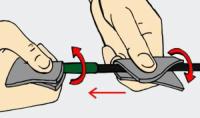
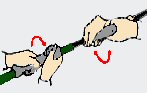
Have a partner hold one side of the joint while you hold the other and gently twist and press sections without using sideway pressure. Both of you hold sections with your fingers close to joints.
B. Pour hot water on large side of the joint as close to the joint as you can to rapidly expand it. Then after a few seconds try twisting or pushing the small side of the joint back down. It's best if you can do this under a tap where the water starts off cold then gets progressively warmer over a few seconds as this reduces the risk of stress cracks developing in the joint.
C. If the hot water technique fails try the next step up. Do the same as above but put ice on the small side of the joint to shrink it. This is easiest if you get some ice from your freezer place it on a cloth or towel and then wrap that around the rod and hold it while you heat the other side with hot water.
D. Try a penetrating lubricant like WD-40, CRC or Tackle Guard. Leave the joint to soak for an hour or two and then try gently to take the rod down.
E.
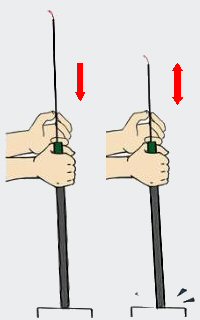
Stand the rod butt on a hard surface like concrete and hold it above the stuck joint. Gently lift and lightly tap the stuck section on the ground. This works best if the lower joints are stuck. For upper sections remove the plug of butt section, pull out the fixed two sections. Then put the rod vertically on a not-too-hard plain ground (or put towel or other soft material on the ground), hold the fixed joints and knock the ground. Never tap the tip on the ground as you are very likely to break it. You can try to combine it with a lubricant or a hot water: pour hot water on large side of the joint and lightly tap the stuck section against the bottom. Always remember to do it very gently, not to apply any sideway pressure, hold larger section with your palms and thinner section with fingers close to joints. Once the section becomes lose it will slide down.
Z. If nothing helped buy another rod from our website and take more care of your fishing gear in the future!
Take a good care of your rod.
Having a rod break at the moment need it most is probably the most frustrating experience you can have on a fishing trip.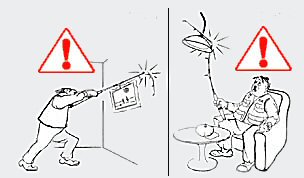
Rod maintenance has nothing to do with rod breakage. Anglers will always find ways to break their rods, starting from regular (car doors) to very stupid (standing on it) or while fighting a huge fish. What should or should not be done to keep our fishing tackle in good shape and ensure many years of fishing enjoyment?
1.
Never lift your catch, always play with the fish and use
landing net to land it. Never raise your rod high with the large fish, keep your handle angle at about 45 degrees or less. All graphite rods, are at risk of breakage if the rod is "high sticked". When the tip of the rod is raised too high, the weaker tip section bears too much of the load and can easily break.
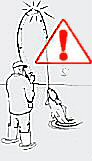
This is one of the most common causes of breakage and is 100% angler-caused.
2. Do not use force to open or close telescopic rod.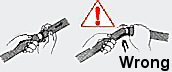
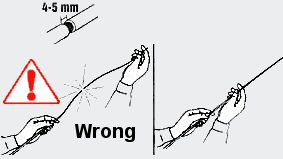
Always extend and insert telescopic sections very gently, try do not extend them too forcibly, try to keep it off the ground to avoid dirt getting into the joints. Do not apply any sideway pressure while insrting sections.
3. Remember, using heavier line and cranking down the drag may easily result in unexpected graphite rod breakage. Graphite is less tolerant of abuse than fiberglass. Always remember your rod's power rating and don't use fishing line or bait that is too heavy.4. Be extra careful when getting your fishing rod out of the car, especially if it is a graphite rod. Too many people break their rod on the car door.
5. Always avoid extreme temperatures.
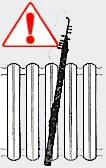
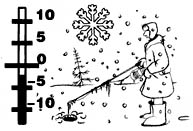
Don't remain the fishing rod in the back carriage of car for a long time. The long time sealed and high temperature or very low temperature conditions are harmful for fishing rod.
6.
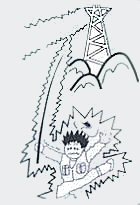
Always pay attention when fishing under or near the high voltage wire because of electrical shock potentiality by high voltage wire and thunder. Carbon fiber is high electricity-conductive material, so it is very dangerous if it touches electrical wire especially when you are close to the water.
8. If you seal up the damp or sordid fishing rod, the moisture will possibly cause the bubbling or scaling off of lacquer. To prevent this, always rub off the moisture on fishing rod and keep it in a ventilated place. Never store a rod in its tube. Humidity can cause the moisture.
9. Always rub off the moisture, salt and dirt before storage.
10.Never use brush, toothpaste, gasoline, dope and other organic substances to clean the fishing rod; it may create damage to rod surface and even the rod itself. Don't clean the rod by steel brush.
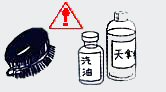
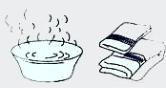
You shall gently remove the dirt, any remaining "fish stuff" or salt by towel, soft brush or cloth dipped with a little soap and water, and after it is dry completely, brushes up with car wax or leather. This will make it easier to clean and help preserve the rod's finish. Wiping the rod down with furniture polish after each use is a good way to keep it looking its best.
11. The best way to store a rod over long periods is to hang it in its case on a pin or clothes hanger inside a wardrobe.
Always remember to take a good care of your rods and they will work for you for a very long time and will bring you large amount of catches and a huge amount of great emotions. More great emotions - longer and healthier is your life.
Back to top
|| Home
|| Site Map
|| Help
|| About Us
|| Contact Us
||
Copyright© 2004-2026 All Fishing Buy. All rights reserved.
Copyright© 2004-2026 All Fishing Buy. All rights reserved.


🎣 Fishing Expert
AllFishingBuy Assistant
Hi! I'm the AllFishingBuy fishing expert. Ask me anything about our rods or fishing techniques — I'm happy to help you find the perfect rod! 🎣
Live Chat